
Theory of Knowledge
Enhanced TOK Lesson Plan: Integrating TOK Concepts with ATL Skills and the IB Learner Profile
Title: “Navigating the Knowledge Network: A Journey through TOK Concepts, ATL Skills, and the IB Learner Profile
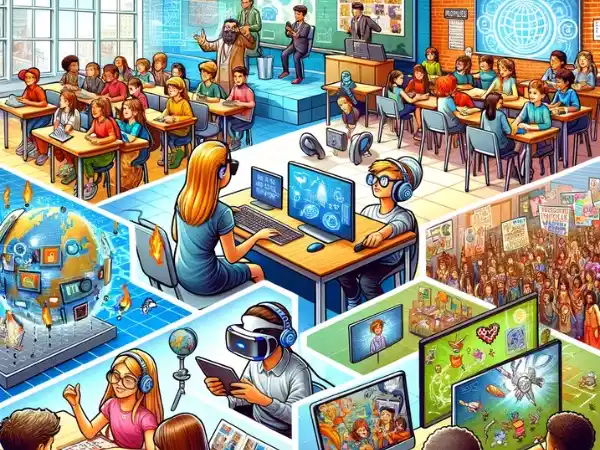
Embark on an enriching educational adventure that integrates Theory of Knowledge (TOK) concepts with Approaches to Learning (ATL) skills and the attributes of the IB Learner Profile. This TOK lesson plan is designed to provide a multifaceted and stimulating learning experience, fostering a deeper understanding and application of knowledge.
Learning Objectives
- Explore the interconnections between TOK concepts, ATL skills, and the IB Learner Profile attributes.
- Develop critical thinking, communication, and self-management skills.
- Cultivate the attributes of the IB Learner Profile through engaging activities.
- Materials Needed
- Interactive digital platforms (e.g., Padlet, Google Classroom)
- Virtual reality (VR) headsets or augmented reality (AR) apps
- Mind mapping tools
- Debate and role-playing props
- Video recording equipment
 Activity Overview
1) Virtual Reality Knowledge Exploration 
Activity: Using VR headsets or AR apps, students will embark on a virtual journey exploring different TOK concepts, experiencing how they intersect with ATL skills and the IB Learner Profile attributes.
Objective: To provide an immersive experience that enhances understanding through innovative technology.
2) ATL Skills Challenge: The TOK Escape Room 
Activity: Students participate in a digital TOK-themed escape room, solving puzzles that require the application of various ATL skills while incorporating TOK concepts.
Objective: To develop problem-solving, collaboration, and critical thinking skills in a fun and challenging environment.
3) TOK Concept Symposium 
Activity: Host a symposium where students present multimedia projects that explore the relationships between TOK concepts, ATL skills, and Learner Profile attributes.
Objective: To encourage deep research, effective communication, and creativity.
4) Role-Play: The Global Knowledge Forum 
Activity: Students take on roles as different TOK concepts, ATL skills, and Learner Profile attributes, engaging in discussions to solve global issues.
Objective: To foster empathy, understanding, and the ability to see complex issues through multiple lenses.
5) Creative Storytelling: The TOK Chronicles 
Activity: Students create and share stories or comic strips that illustrate the TOK concepts in action, highlighting how they apply ATL skills and embody the Learner Profile.
Objective: To engage creative thinking and storytelling skills, making TOK concepts relatable and memorable.
6) Reflective Blogging: The TOK Diary 
Activity: Students maintain a digital diary or blog, reflecting on their experiences and growth in understanding TOK, ATL skills, and the Learner Profile.
Objective: To encourage ongoing reflection, self-awareness, and digital literacy.
This lesson plan offers a captivating educational journey, inviting students to not only learn about TOK concepts but to live them, infused with the spirit of the IB Learner Profile and the practicality of ATL skills. It’s not just a lesson; it’s a launchpad for inquisitive, thoughtful, and skilled learners ready to take on the world!
Connecting the 12 TOK concepts with the IB Learner Profile
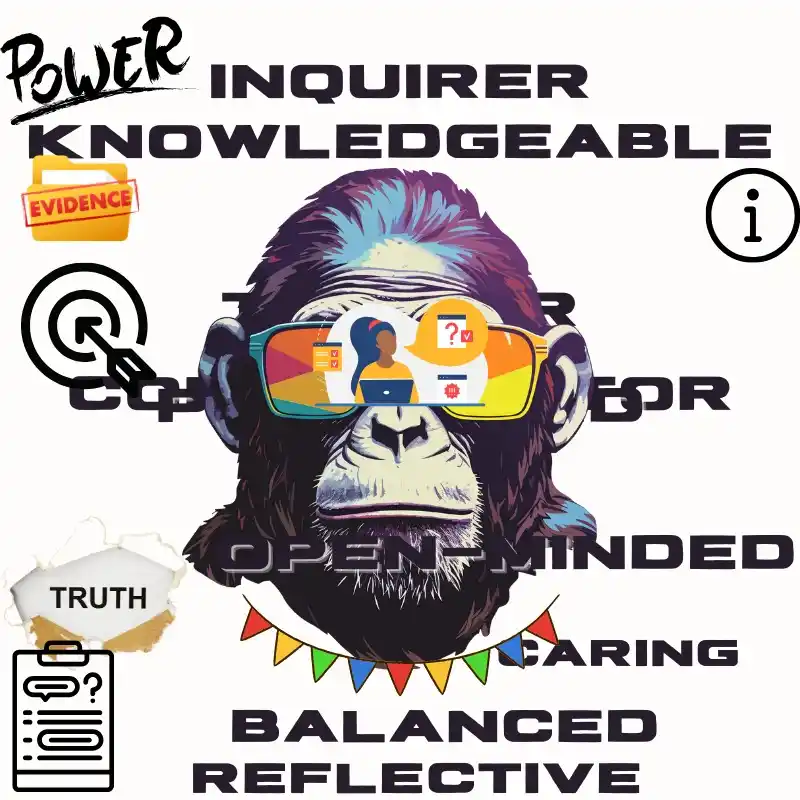
The essence of the IB Learner Profile and TOK concepts are centred around the whimsical image of a chimpanzee wearing a hat.
The TOK concept evidence can be connected to each of the IB Learner Profiles in the following manner:
1. Inquirers Connection: Inquiry involves seeking evidence to support or refute claims.
Activity: Host a “Mystery Inquiry” game
where students investigate a simulated scenario (like a historical event or scientific phenomenon) using different pieces of evidence to draw a conclusion.
2. Knowledgeable Connection: Being knowledgeable entails understanding how evidence underpins various areas of knowledge.
Activity: Organise a “Knowledge Fair” where students create exhibits that demonstrate how evidence is used in different disciplines (like science, history, or art).
3. Thinkers Connection: Critical thinking is about analysing and evaluating the quality of evidence…
The TOK concept of certainty closely intertwines with the IB Learner Profile attributes. Here’s how it connects with each attribute and suggestions for innovative, out-of-the-box activities:
1. Inquirers Connection: Inquiry often involves exploring areas of uncertainty and developing an understanding of what can be known for certain.
Activity: Escape Room Challenge – Create a TOK-themed escape room where students solve puzzles related to areas of knowledge and ways of knowing, focusing on distinguishing between certain and uncertain knowledge.
2. Knowledgeable Connection: Being knowledgeable includes understanding the degrees of certainty and the foundations of knowledge in various disciplines.
Activity: Knowledge Expedition – Organise a virtual or physical “expedition” where students visit different “knowledge stations” (e.g., science, history, ethics) to explore how certainty is established in each field.
3. Thinkers Connection: Critical thinking involves evaluating the certainty of different knowledge claims.
Activity: Philosophical Chairs Debate – Host debates where students switch sides based on the strength and certainty of arguments presented.
4. Communicators Connection: Communicators must convey ideas clearly, considering the certainty of the information they share.
Activity: Mock Newsroom – Students role-play as journalists and editors in a newsroom, deciding how to report stories based on the certainty of information.
5. Principled Connection: Being principled involves ethical considerations in presenting information, especially regarding its certainty.
Activity: Ethical Dilemma Skits – Students perform skits showing ethical dilemmas in misrepresenting certainty, like in advertising or politics.
6. Open-Minded Connection: Open-mindedness includes being receptive to uncertainty and alternative viewpoints.
Activity: Cultural Perspective Exchange – Students research and present how different cultures understand and deal with uncertainty in knowledge.
7. Caring Connection: Caring involves considering how the certainty or uncertainty of information affects others.
Activity: Community Survey Project – Students conduct surveys to understand community beliefs on certain topics and present findings empathetically.
8. Risk-Takers Connection: Risk-takers engage with uncertainty and the unknown.
Activity: Innovation Lab – Students create a project or experiment in an area with uncertain outcomes, documenting their learning process.
9. Balanced Connection: A balanced perspective appreciates the certainty and ambiguity inherent in different kinds of knowledge.
Activity: Balanced Knowledge Fair – Students create exhibits that showcase the balance between certainty and uncertainty in various areas of knowledge.
10. Reflective Connection: Reflective learners consider the role of certainty in their own understanding.
Activity: Reflection Circles – Students participate in guided discussions reflecting on how their own beliefs and understandings have changed over time regarding certainty.
The TOK concept of truth connects with the IB Learner Profile attributes in various ways. Below are innovative and engaging activities for each Learner Profile attribute that explore the concept of truth:
1. Inquirers Connection: Inquirers are naturally curious about what is true and strive to seek out truth through inquiry.
Activity: Mystery History Quest – Create a historical investigation game where students must uncover the ‘truth’ about a historical event using primary and secondary sources.
2. Knowledgeable Connection: Being knowledgeable involves understanding how truths are constructed differently across various Areas of Knowledge.
Activity: Truth Gallery Walk – Set up stations representing different disciplines (science, art, mathematics, history, etc.), each with a controversial statement. Students walk through and debate the ‘truth’ of each statement from the perspective of each discipline.
3. Thinkers Connection: Thinkers critically assess what is presented as truth, evaluating arguments and evidence.
Activity: Critical Cinema Club – Host a movie screening where the film’s narrative is based on a controversial or ambiguous ‘truth’. Afterwards, facilitate a discussion analyzing the portrayal of truth in the film.
4. Communicators Connection: Communicators understand the importance of conveying truth and recognise the impact of misinformation.
Activity: Fake News Workshop – Students create their own news stories, some based on truth and others on falsehoods, and learn to identify and discuss the differences.
5. Principled Connection: Being principled involves upholding the truth and demonstrating integrity.
Activity: Ethics Bowl – Pose ethical dilemmas where the truth may be uncomfortable or challenging to reveal. Students debate the best course of action and the importance of truth in each scenario.
6. Open-Minded Connection: Open-mindedness in TOK involves considering various perspectives and truths that may differ from one’s own.
Activity: Cultural Truth Exchange – Students research and present on what is considered ‘truth’ in different cultures and engage in discussions on the relativism of truth.
7. Caring Connection: A caring individual considers how truths and their expressions affect others’ feelings and well-being.
Activity: Empathy Mapping – Students create empathy maps for individuals involved in a case where the truth had significant personal impacts, fostering understanding and empathy.
8. Risk-Takers Connection: Risk-takers challenge accepted norms and truths, daring to explore uncharted or controversial territories.
Activity: Controversial Debate Club – Hold debates on controversial topics where students must argue against conventional truths, encouraging them to explore unfamiliar perspectives.
9. Balanced Connection: A balanced view involves recognising that truth can be complex and multifaceted.
Activity: Dialectical Discussions – Facilitate discussions where students explore and reconcile opposing ‘truths’ on complex issues, learning to appreciate the multifaceted nature of truth.
10. Reflective Connection: Reflective individuals contemplate their own beliefs and understandings of truth.
Activity: Truth and Self-Journaling – Students maintain journals where they reflect on their evolving understanding of truth in light of new knowledge and experiences.
Interpretation, as a TOK concept, aligns well with the attributes of the IB Learner Profile. Here are unique and engaging activities that connect interpretation with each Learner Profile attribute.
1. Inquirers Connection: Inquirers are naturally curious and seek to interpret information and experiences in a meaningful way.
Activity: Interpretive Scavenger Hunt – Create a scavenger hunt where each clue requires students to interpret a piece of poetry, artwork, or a cryptic message to find the next location or item.
2. Knowledgeable Connection: Being knowledgeable involves understanding diverse interpretations across various disciplines.
Activity: Cross-Disciplinary Interpretation Challenge – Students participate in a challenge where they interpret a single phenomenon (e.g., a historical event) from the perspective of different disciplines (science, art, history).
3. Thinkers Connection: Thinkers critically analyse and evaluate different interpretations of information and ideas.
Activity: Interpretation Debate Arena – Host debates where students argue for different interpretations of a philosophical question or a piece of literature.
4. Communicators Connection: Effective communicators understand and convey their interpretations clearly to others.
Activity: Pictorial Communication Game – Students express complex ideas or themes through drawings or images, and others interpret and discuss these visual communications.
5. Principled Connection: Being principled involves acknowledging and respecting the interpretations of others.
Activity: Ethical Dilemmas Forum – Present ethical dilemmas and have students discuss and respect the diverse interpretations of these situations.
6. Open-Minded Connection: Open-minded individuals appreciate and consider a range of interpretations.
Activity: Cultural Interpretation Exchange – Students explore and present how different cultures interpret common human experiences (like love, death, success).
7. Caring Connection: Caring individuals are empathetic towards others’ interpretations and perspectives.
Activity: Empathy Role Play – Students role-play scenarios from different viewpoints, aiming to understand and empathize with others’ interpretations.
8. Risk-Takers Connection: Risk-takers courageously explore and present unconventional or unpopular interpretations.
Activity: Controversial Artwork Creation – Students create artwork that challenges conventional interpretations and present their rationale in a gallery setting.
9. Balanced Connection: A balanced approach recognizes the value of multiple interpretations and perspectives.
Activity: Balanced News Reporting Project – Students research and report on a current event, presenting balanced interpretations from various stakeholders or perspectives.
10. Reflective Connection: Reflective learners contemplate their own interpretations and how they have been shaped.
Activity: Reflection Circles on Personal Beliefs – Students participate in guided reflection sessions, discussing how their interpretations of key life concepts have evolved.
The TOK concept of power can be intricately connected with each attribute of the IB Learner Profile. Here are engaging activities that explore this connection:
1. Inquirers Connection: Inquirers are curious about the dynamics of power in knowledge creation and dissemination.
Activity: Power Dynamics Investigation – Students research a historical or current event and present how power influenced the knowledge produced about it.
2. Knowledgeable Connection: Being knowledgeable includes understanding how power shapes and limits access to knowledge.
Activity: Knowledge and Power Symposium – Students hold a mini-conference discussing case studies where power dynamics significantly influenced knowledge in different areas (science, history, etc.).
3. Thinkers Connection: Thinkers critically evaluate the influence of power on knowledge and its ethical implications.
Activity: Ethical Power Debate – Students debate ethical issues related to power in knowledge, such as censorship, propaganda, or information control.
4. Communicators Connection: Communicators need to understand how power relations affect communication and knowledge sharing.
Activity: Power in Media Workshop – Analyze how power dynamics are portrayed in different media sources and create a media piece that addresses power issues.
5. Principled Connection: Being principled involves recognizing and challenging unfair power dynamics in the pursuit of knowledge.
Activity: Principled Knowledge Advocacy Campaign – Create and run a campaign on an issue where power dynamics suppress important knowledge or truths.
6. Open-Minded Connection: Open-mindedness includes being aware of and sensitive to how power dynamics affect different perspectives and knowledge.
Activity: Perspectives and Power Discussion Circles – Facilitate discussions on how power shapes perspectives in various cultures and communities.
7. Caring Connection: Caring entails understanding and addressing the impacts of power imbalances on individuals and communities.
Activity: Empathy Mapping in Power Structures – Create empathy maps for people affected by power imbalances in different scenarios.
8. Risk-Takers Connection: Risk-takers challenge power structures that unjustly limit access to knowledge.
Activity: Change-Makers Project – Identify and develop a plan to address a power imbalance in their school or local community.
9. Balanced Connection: A balanced view recognizes the complex role of power in knowledge creation and its benefits and pitfalls.
Activity: Balanced Power Role-Play – Simulate a situation where students take on roles with varying levels of power to understand its impact on decision-making and knowledge.
10. Reflective Connection: Reflective learners consider how their understanding of knowledge is influenced by their positions of power.
Activity: Power Position Reflection Journal – Maintain a journal reflecting on how their power or lack thereof influences their access to and perception of knowledge.
Each activity encourages students to engage with the concept of power in diverse and thought-provoking ways, enhancing their understanding of how power interacts with knowledge within the framework of the IB Learner Profile.
Justification, as a key concept in the Theory of Knowledge (TOK), intersects meaningfully with the attributes of the IB Learner Profile. Here are some engaging activities for each Learner Profile attribute to explore the concept of justification:
1. Inquirers Connection: Inquirers seek to understand the basis of knowledge claims and the reasons behind them.
Activity: Investigative Journalism Project – Students act as journalists investigating a current event or historical incident, focusing on uncovering and understanding the justifications behind different viewpoints or actions.
2. Knowledgeable Connection: Being knowledgeable involves understanding how and why knowledge is justified in different disciplines.
Activity: Justification Fair – Students create and present exhibits that explain how justification works in various areas of knowledge, like science, history, and ethics.
3. Thinkers Connection: Critical thinkers evaluate the strength of justifications for knowledge claims.
Activity: Justification Debate Tournament – Organise debates where students must justify their positions on various issues, using logical reasoning and evidence.
4. Communicators Connection: Effective communicators can articulate the justifications for their ideas and understand others’ reasoning.
Activity: Justification Speech Contest – Students prepare and deliver speeches on a topic of their choice, focusing on clearly and persuasively justifying their views.
5. Principled Connection: Principled individuals understand the importance of sound justification in ethical decision-making.
Activity: Ethical Dilemma Role Play – Students role-play scenarios that present ethical dilemmas, requiring them to justify their decisions and actions.
6. Open-Minded Connection: Open-mindedness involves appreciating that there are different ways of justifying knowledge.
Activity: Cross-Cultural Justification Discussion – Students explore how different cultures justify beliefs and practices, leading to a discussion on cultural relativism in knowledge.
7. Caring Connection: Caring individuals consider the impact of justifications on others, especially when it involves beliefs and values.
Activity: Community Impact Analysis – Students analyze a community issue or policy, discussing how the justifications for it affect different community members.
8. Risk-Takers Connection: Risk-takers challenge established justifications and explore new ways of understanding.
Activity: Innovative Theory Presentation – Students research and present an unconventional theory or idea, explaining how it could be justified differently from traditional views.
9. Balanced Connection: Balanced individuals recognize the need to consider multiple justifications to form a well-rounded understanding.
Activity: Multiple Perspectives Forum – Host a forum where students discuss a topic from multiple perspectives, analysing the justifications for each.
10. Reflective Connection: Reflective learners examine their own beliefs and the justifications behind them.
Activity: Reflective Justification Journals – Students keep journals where they reflect on their personal beliefs and the justifications for these beliefs, especially in light of new information or perspectives.
The TOK concept of explanation is intricately connected with the IB Learner Profile attributes. Here are super engaging activities for each attribute to explore the concept of explanation:
1. Inquirers Connection: Inquirers are curious about understanding and explaining phenomena around them.
Activity: Mystery Object Analysis – Provide students with a mysterious object or phenomenon. They research and develop an explanation, utilising various resources and their own reasoning.
2. Knowledgeable Connection: Knowledgeable students understand and can explain concepts and ideas across a range of disciplines.
Activity: Interdisciplinary Explanation Fair – Students create presentations explaining a concept from two different Areas of Knowledge, highlighting how explanations differ across disciplines.
3. Thinkers Connection: Thinkers critically analyse and assess the quality of explanations.
Activity: Explanation Critique Workshop – Students evaluate and critique explanations found in media, textbooks, or academic papers, assessing their validity and reasoning.
4. Communicators Connection: Effective communicators articulate explanations clearly and understand others’ explanations.
Activity: Explain It To A Child – Students choose a complex topic and simplify it into an explanation suitable for a young child, focusing on clarity and accessibility.
5. Principled Connection: Principled students value explanations that are honest and based on sound reasoning and evidence.
Activity: Ethical Explanation Panel – Students discuss how misinformation or biased explanations can lead to ethical issues, using real-world examples.
6. Open-Minded Connection: Open-minded students appreciate that there can be multiple valid explanations for the same phenomenon.
Activity: Cultural Explanations Exchange – Students explore and present different cultural explanations for a common human experience or natural event.
7. Caring Connection: Caring students consider how explanations might affect others’ understanding and perspectives.
Activity: Community Understanding Project – Students develop explanatory materials (like brochures or videos) on important social or environmental issues for the local community.
8. Risk-Takers Connection: Risk-takers challenge conventional explanations and explore alternative viewpoints.
Activity: Alternative Theories Debate – Students debate non-mainstream theories or explanations, challenging them to think outside the box and defend unconventional ideas.
9. Balanced Connection: Balanced learners appreciate the complexity of explanations and avoid oversimplification.
Activity: Balanced Explanation Roundtables – Discuss a complex topic, such as climate change, from multiple explanatory viewpoints, emphasising a balanced understanding.
10. Reflective Connection: Reflective learners ponder on the explanations they accept and how these shape their understanding of the world.
Activity: Reflection Journals on Personal Beliefs – Students maintain journals where they reflect on the explanations they hold for various personal beliefs or observations and how these have changed over time.
The TOK concept of objectivity deeply connects with the IB Learner Profile attributes. Here are some engaging activities that link objectivity to each Learner Profile attribute:
1. Inquirers Connection: Inquirers seek knowledge and understanding, striving for objectivity in their inquiries.
Activity: Objective Inquiry Project – Students select a controversial topic and conduct research from multiple sources to create a presentation that objectively presents different sides of the issue.
2. Knowledgeable Connection: Knowledgeable students understand the importance of objectivity in creating well-rounded knowledge.
Activity: Objective Knowledge Exhibition – Create an exhibition where students display information on various topics, ensuring that they present data and conclusions objectively.
3. Thinkers Connection: Thinkers critically analyze and evaluate information, striving for objectivity in their reasoning.
Activity: Critical Thinking Debates – Students engage in debates on complex issues, focusing on constructing arguments based on objective reasoning rather than personal opinion.
4. Communicators Connection: Effective communicators express themselves clearly and objectively, and understand others’ perspectives.
Activity: Objective Newsroom – Role-play as journalists in a newsroom where students must write and report news stories in an objective and unbiased manner.
5. Principled Connection: Principled students understand the value of being objective and fair in their judgments.
Activity: Ethical Dilemma Discussions – Discuss ethical dilemmas and have students objectively evaluate different courses of action, considering fairness and justice.
6. Open-Minded Connection: Open-mindedness involves appreciating multiple perspectives and seeking objectivity.
Activity: Perspective Analysis Roundtable – Explore a historical event or current issue from various cultural or ideological perspectives to understand the importance of objectivity in forming a balanced view.
7. Caring Connection: Caring students consider how personal biases can affect their judgments of others.
Activity: Empathy and Objectivity Role-Playing – Role-play scenarios where students must put aside personal biases and show empathy, demonstrating objective understanding.
8. Risk-Takers Connection: Risk-takers challenge subjective norms and biases, advocating for objective approaches.
Activity: Challenging Biases Workshop – Conduct a workshop where students identify and challenge common biases in their school or community, promoting objective thinking.
9. Balanced Connection: Balanced individuals recognise the importance of objectivity but also understand its limits.
Activity: Balanced Decision-Making Game – Simulate decision-making scenarios where students must weigh objective facts against subjective experiences to make balanced decisions.
10. Reflective Connection: Reflective learners consider their own biases and strive for objectivity in their thinking.
Activity: Reflective Bias Journals – Maintain journals where students reflect on their biases and how they can work towards more objective thinking and understanding.
The TOK concept of perspective is intrinsically linked to the IB Learner Profile attributes. Below are engaging and interactive activities that explore this connection for each attribute:
1. Inquirers Connection: Inquirers actively seek out and consider multiple perspectives to deepen their understanding.
Activity: Perspective Scavenger Hunt – Set up a scavenger hunt where each clue requires students to look at an issue or object from a different perspective to find the next clue.
2. Knowledgeable Connection: Knowledgeable students understand that different perspectives can provide a more comprehensive understanding of a topic.
Activity: Perspective Swap Debates – Host debates where students initially argue for one side of an issue, then switch to argue for the opposite perspective.
3. Thinkers Connection: Thinkers critically analyse and evaluate perspectives, understanding their influence on knowledge.
Activity: Perspective Analysis Workshop – Analyse a historical event or current issue from multiple perspectives, discussing how each perspective shapes understanding.
4. Communicators Connection: Effective communicators understand and articulate different perspectives and can express their own clearly.
Activity: Multimedia Perspective Project – Students create multimedia presentations (videos, podcasts, etc.) expressing different perspectives on a topic.
5. Principled Connection: Principled individuals respect different perspectives and use them to inform ethical decision-making.
Activity: Ethical Perspective Role-Play – Students role-play various stakeholders in an ethical dilemma, each with different perspectives, to explore and resolve the issue.
6. Open-Minded Connection: Open-mindedness involves being receptive to and respectful of different perspectives.
Activity: Cultural Perspective Exchange – Students research and present perspectives on a common issue from different cultural viewpoints.
7. Caring Connection: Caring individuals consider how different perspectives affect people’s feelings and experiences.
Activity: Empathy Mapping – Students create empathy maps for individuals from different perspectives to understand their experiences and viewpoints better.
8. Risk-Takers Connection: Risk-takers courageously explore and present unconventional or minority perspectives.
Activity: Unheard Voices Presentation – Students research and present perspectives that are often unheard or marginalized in mainstream discussions.
9. Balanced Connection: Balanced learners appreciate the importance of considering multiple perspectives for a well-rounded understanding.
Activity: Balanced Perspective Panel – Hold a panel discussion on a controversial topic where each panelist represents a different perspective.
10. Reflective Connection: Reflective individuals think about their own perspectives and how they have been shaped.
Activity: Reflective Perspective Journals – Students maintain journals reflecting on how their perspectives on various issues have evolved and what influenced these changes.
The TOK concept of culture is deeply intertwined with the IB Learner Profile attributes. Here are engaging activities to explore the relationship between culture and each IB Learner Profile attribute:
1. Inquirers Connection: Inquirers explore how cultural contexts influence knowledge.
Activity: Cultural Inquiry Research Project – Students research and present how a specific knowledge area (like mathematics, art, or science) is approached differently in various cultures.
2. Knowledgeable Connection: Knowledgeable students understand the impact of cultural perspectives on different areas of knowledge.
Activity: Cross-Cultural Knowledge Fair – Organize a fair where students represent different cultures and share how these cultures understand and produce knowledge in various domains.
3. Thinkers Connection: Thinkers critically analyze how cultural assumptions and biases affect understanding.
Activity: Cultural Assumptions Debate – Students debate on topics that reveal cultural biases and assumptions in knowledge, encouraging critical examination of these influences.
4. Communicators Connection: Effective communicators acknowledge and bridge cultural differences in communication.
Activity: Intercultural Communication Workshop – Role-play scenarios that require students to navigate cultural misunderstandings or differences in communication styles.
5. Principled Connection: Principled individuals recognise the importance of respecting cultural diversity in knowledge and ethics.
Activity: Ethical Dilemmas Across Cultures – Discuss ethical dilemmas and explore how different cultural perspectives influence ethical decision-making.
6. Open-Minded Connection: Open-mindedness involves appreciating cultural diversity and perspectives in constructing knowledge.
Activity: Cultural Perspective Exchange – Students pair up with someone from a different cultural background to exchange perspectives on a global issue.
7. Caring Connection: Caring students are empathetic towards cultural differences and strive to understand and respect them.
Activity: Cultural Empathy Role-Play – Students role-play scenarios that involve navigating cultural sensitivities, fostering empathy and understanding.
8. Risk-Takers Connection: Risk-takers challenge cultural norms and explore knowledge beyond their cultural comfort zones.
Activity: Cultural Norms Challenge – Students research and present cultural norms that are different from their own, challenging their own comfort zones and preconceptions.
9. Balanced Connection: Balanced individuals recognize the value of multiple cultural perspectives in enriching understanding.
Activity: Balanced Cultural Perspectives Panel – Host a panel discussion where speakers from different cultural backgrounds discuss a topic, highlighting the value of diverse viewpoints.
10. Reflective Connection: Reflective learners contemplate the influence of their own cultural background on their perception of knowledge.
Activity: Cultural Reflection Journals – Students keep journals reflecting on how their cultural background influences their understanding of various issues or areas of knowledge.
The TOK concept of values intersects meaningfully with the attributes of the IB Learner Profile. Here are engaging activities tailored to each attribute that explore the relationship between values and knowledge:
1. Inquirers Connection: Inquirers are curious about how values influence knowledge and understanding.
Activity: Values Investigation Lab – Students investigate how values have influenced scientific research or historical events, presenting their findings in an engaging format like a mini-documentary or a blog post.
2. Knowledgeable Connection: Knowledgeable students understand the impact of values on the creation and interpretation of knowledge.
Activity: Values in Knowledge Symposium – Host a symposium where students present case studies on how values have shaped different areas of knowledge, such as ethics in medicine or bias in history.
3. Thinkers Connection: Thinkers critically analyse and evaluate the role of values in knowledge claims.
Activity: Values and Ethics Debate – Organise debates on controversial topics, focusing on how underlying values influence positions and arguments.
4. Communicators Connection: Effective communicators express their values clearly and understand how values influence communication.
Activity: Values-Based Storytelling Workshop – Students create and share stories (written, digital, or oral) that communicate values in a powerful way.
5. Principled Connection: Principled students recognise the importance of values in guiding ethical knowledge and actions.
Activity: Principles in Action Project – Students identify a community issue and develop a project that addresses it, aligning with their personal and societal values.
6. Open-Minded Connection: Open-minded students appreciate diverse values and their impact on knowledge.
Activity: Values Exchange Forum – Conduct a forum where students explore and discuss how different cultures or societies prioritize different values in knowledge.
7. Caring Connection: Caring students understand how values influence the well-being of individuals and communities.
Activity: Values and Community Service – Engage in a community service project, reflecting on how personal and community values inform their service.
8. Risk-Takers Connection: Risk-takers challenge established values and explore new ways of valuing knowledge.
Activity: Challenging Norms Panel – Students research and present on individuals or groups who challenged societal values to advance knowledge or rights.
9. Balanced Connection: Balanced learners recognize the importance of balancing different values in knowledge.
Activity: Balanced Values Workshop – Students participate in workshops where they must balance conflicting values in complex scenarios (e.g., environmental vs. economic values).
10. Reflective Connection: Reflective learners contemplate their own values and how they influence their understanding.
Activity: Values Reflection Circle – Students participate in reflective discussions, sharing how their personal values have shaped their learning and perspectives.
Each activity is designed to be interactive and thought-provoking, allowing students to engage with the concept of values in diverse contexts, thereby enhancing their understanding of TOK concepts within the framework of the IB Learner Profile.
The TOK concept of responsibility is closely intertwined with the IB Learner Profile attributes. Here are super-engaging activities that explore this relationship:
1. Inquirers Connection: Inquirers understand the responsibility that comes with seeking and acquiring knowledge.
Activity: ‘Responsible Researcher’ Quest – Students embark on a research project on a global issue, focusing on ethical information gathering and presenting findings responsibly.
2. Knowledgeable Connection: Being knowledgeable includes a responsibility to use and share knowledge ethically.
Activity: Knowledge Ethics Symposium – Organize a symposium where students present on historical or current cases where knowledge was used responsibly or irresponsibly.
3. Thinkers Connection: Thinkers critically assess the responsibilities associated with knowledge creation and consumption.
Activity: Ethical Dilemma Workshops – Present various ethical dilemmas related to knowledge (e.g., scientific ethics) and have students discuss and propose solutions.
4. Communicators Connection: Communicators bear the responsibility of conveying information truthfully and respectfully.
Activity: ‘Truth and Consequences’ Media Project – Students create a media campaign or news segment that addresses the responsibility of truth in media.
5. Principled Connection: Principled individuals uphold their responsibilities to act with integrity and honesty in the pursuit of knowledge.
Activity: Integrity in Action Role-Play – Students role-play scenarios where they must make decisions that test their integrity and sense of responsibility.
6. Open-Minded Connection: Open-mindedness involves a responsibility to consider and respect diverse perspectives.
Activity: Global Perspectives Exchange – Host a cultural exchange event where students share and discuss different perspectives on key global issues.
7. Caring Connection: Caring students recognize their responsibility to use knowledge in a way that positively impacts others.
Activity: Community Impact Project – Develop a project that uses knowledge to address a community need or issue, reflecting on the responsibility to care for others.
8. Risk-Takers Connection: Risk-takers understand the responsibility that comes with challenging norms and exploring new ideas.
Activity: Innovators’ Challenge – Students develop innovative solutions to problems, focusing on responsible risk-taking and the potential impact of their ideas.
9. Balanced Connection: A balanced approach to knowledge includes being responsible for one’s well-being and the well-being of others.
Activity: Well-being Workshop – Organize a workshop where students explore how to balance personal well-being with academic and other responsibilities.
10. Reflective Connection: Reflective learners consider the impact of their actions and the responsibility they have for their knowledge and beliefs.
Activity: Reflection Circles on Responsibility – Facilitate reflection sessions where students share and reflect on times they had to take responsibility for their knowledge and actions.
Each activity encourages students to engage deeply with the concept of responsibility in the context of knowledge, enhancing their IB Learner Profile attributes in meaningful and interactive ways.