
Theory of Knowledge
In this TOK exhibition sample, we will explore TOK IA prompt number 18, -‘Are some things unknowable?’
To highlight the nature of the IA prompt, students are expected to understand that knowledge comes with a lot of problems, and sometimes due to our limitations, not all knowledge but some things are unknowable.
The question arises, ‘what is unknowable?’ and ‘how do we measure or identify the degree to which we know them?’. Does knowing a bit count as unknowable ,or even if we know a great amount of information about something, but not fully, still count as unknowable?
Here, the IA prompt presents the opportunity to choose an object that is unknown to a student. It could be an artwork, such as a picture painted by a painter. It can be a math problem which a student finds difficult to understand. For some, it could be a UFO (Unidentified Flying Object). The list is endless.
There are so many territories or areas of knowledge that can be explored; however, as mentioned in the TOK2022 guidebook, students must retain their thinking process to one of the optional themes or core themes, as it will help in making the right set of connections with the prospective TOK exhibition objects. For this TOK exhibition sample, I have chosen The Core theme. The three TOK exhibition objects which I have chosen are:
TOK exhibition objects
TOK exhibition objects 1 – Theory of Knowledge
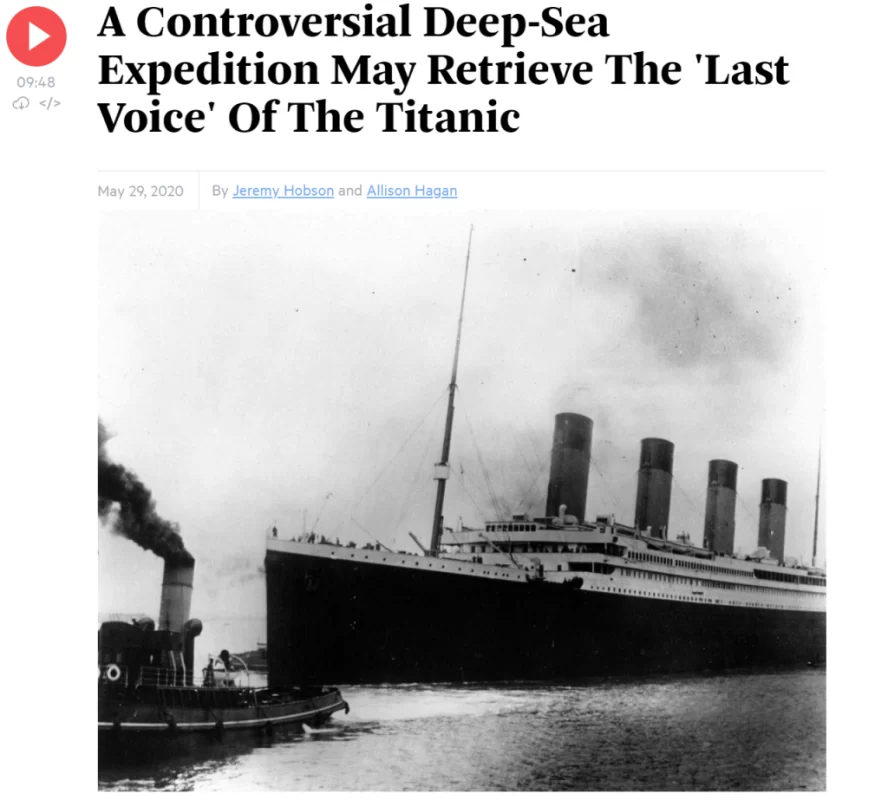
The complete details of the TOK exhibition object 1 can be taken from here. Basically, the idea is to retrieve the telegraph machine from the shipwreck to solve the unknown facts that happened on the night when the Titanic sank. It may explain the deep mystery of some last messages sent from The Titanic; however, allowing people to retrieve material from the seabed may result in robbery. Also, there is a potential danger in visiting the site.
For these reasons, the knowledge and the knower both may remain unknown. The object/image is not ordinary or generic but exists in the books of history in a time and virtual space now, with its discussion that resonates with the real-world issue of how some things may remain unknowable.
TOK exhibition objects 2 – Theory of Knowledge

While some may claim that the object fits in another AOK, i.e., however, it equally poses challenges about the knowledge we possess about prime numbers. Further, it raises questionable arguments about the knower’s approach as a real-life application of it. The details about the TOK exhibition objects can be seen here.
TOK Exhibition objects 3 – Theory of Knowledge

The TOK exhibition object 3 is a case of our knowledge about astrology. It is a pure pseudoscience and knowledge claims about it are relatively untestable. My friend, who is a Virgo did not see any of the future forecasts come true as per astrology predictions, yet she genuinely and regularly looks for horoscope speculations every week.
The ‘Future’ is unknowable, and the very nature of it makes the knower curious. The knowledge about the future is uncertain, requires justification, could be biased, has limitations and many other things.
The TOK exhibition requires students to write not more than 950 words on the three TOK exhibition objects chosen. The idea is to find connections between ‘the knowledge’ and ‘The Knower’. Sometimes, the knowledge in itself has come to a point where further exploration of it is not possible due to certain limitations. Students must retain their focus on the nature of the knowledge, in this case, and how the knower plays an important part in exploring and finding ways to go beyond the current set of truths available. This will assist in justifying the use of the objects to connect well with the ‘Unknowable’ part of the IA prompt.
If you like the above content, don’t forget to read more on the TOK November essay titles. You or your friend needs our assistance. Further, you may also look at the Knowledge and the knower page.