
Theory of Knowledge
TOK Lesson plan for the introduction of the TOK concept- evidence:
In this TOK Lesson Plan, evidence isn’t just a simple fact; it’s a foundational concept that demands critical examination. It’s the bedrock upon which we construct our understanding, justify our claims, and evaluate the validity of different perspectives. Without a rigorous approach to understanding evidence, we risk building our knowledge on shaky ground.
This exploration delves into the multifaceted nature of evidence within the TOK framework. We’ll unpack:
- The different forms evidence can take: From empirical data to expert testimony, and even personal experience.
- The role of interpretation: Why the same piece of evidence can lead to different conclusions.
- The impact of context and perspective: How our biases and background influence what we consider “good” evidence.
- The challenges of assessing reliability and validity: How do we discern trustworthy evidence from misinformation?
This encourages students to explore both the validating power of evidence and its potential to mislead or be misinterpreted—perfect for Theory of Knowledge.
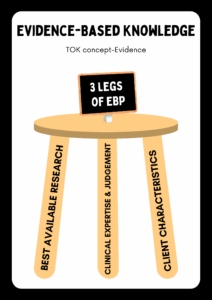
Fig:-This TOK concepts diagram illustrates the three pillars of evidence-based knowledge—research, expertise, and client context—highlighting how evidence supports decision-making in real-world contexts.expertise and judgment, and client characteristics.
Table of contents
Discover how the TOK concept of Evidence takes on new meaning across diverse knowledge contexts in this exclusive lesson series.
Tailored for educators seeking high-engagement, concept-driven resources, this unit invites students to think deeply about what we accept as evidence, who provides it, and how it varies across disciplines and worldviews.
Slide 1: Introducing one of the TOK concepts: ‘Evidence’ in Real-World Knowledge
Kick off with an engaging hook and a classroom project that turns current events into epistemic inquiry.
Slide 2: Linking TOK Optional Theme: Knowledge and Technology through one of the TOK concepts: Evidence
Explore how emerging technologies challenge traditional ways of knowing and reframe how evidence is generated and judged.
Slide 3: Exploring the Role of Language in Shaping one of the TOK concepts: Evidence
Unpack how the language used in public discourse influences the presentation and perception of evidence.
Slide 4: Examining Political Contexts and TOK concept, Evidence-Based Decisions
Analyze how evidence is applied, contested, or misused in the formation of policy and leadership narratives.
Slide 5: Investigating Religious Knowledge and Interpretations of Evidence
Contrast how different belief systems define, justify, and apply evidence within their frameworks of understanding.
Slide 6: Understanding Indigenous Knowledge Systems and their Use of Evidence
Explore how traditional knowledge and cultural practice define and transmit evidence in non-Western contexts.
Slide 1 — Importance of Applying TOK concept: Evidence to Real-Life Situations
Theory of Knowledge (TOK) Concept Focus: Evidence
Evidence in Science Reporting
Real-World Example
Media coverage of a new scientific discovery is a powerful way to introduce the TOK concept of evidence in action.
TOK Analysis:
Students can evaluate the evidence presented in the report, discuss the reliability of sources, and consider how evidence is used to support knowledge claims. This connects directly to the knowledge framework and strengthens their ability to assess how knowledge is constructed and communicated in the real world.
Activities for the TOK Classroom as purposeful theory of knowledge (TOK) resources on TOK concepts for teachers and students
Activity 1:
Creating a student-led TOK podcast analyzing media coverage of a new COVID-19 vaccine can be a fantastic way to engage learners. This format allows for a more dynamic and interactive exploration of the topic — one that brings TOK alive through real-world examples and authentic inquiry.
Consider inviting a guest speaker, such as a science teacher, health professional, or journalist, to add depth and credibility to the discussion. This encourages students to connect Theory of Knowledge with lived experiences and expertise.
Suggested Framework for Your Podcast
Podcast Title:
Unraveling the Truth: A TOK Analysis of COVID-19 Vaccine Reporting
(Introduction, 1–2 minutes)
-
Briefly explain the relevance of the topic in the context of Theory of Knowledge.
-
Link to the core TOK concept of evidence.
Segment 1: Evaluating the Evidence (3–5 minutes)
-
Present the scenario: a news report on a new COVID-19 vaccine.
-
Discuss the types of evidence reported (clinical trial data, expert opinions).
-
Analyze the robustness of the study design and how the data is interpreted.
Musical Interlude (30 seconds)
A short musical break to segment the podcast and maintain engagement.
Segment 2: Reliability of Sources (3–5 minutes)
-
Examine the credibility of the study’s conductors and the publishing journal.
-
Discuss potential conflicts of interest, such as pharmaceutical funding.
-
Highlight the importance of scrutinizing sources in scientific reporting.
Musical Interlude (30 seconds)
Segment 3: Use of TOK concept Evidence to Support Claims (3–5 minutes)
-
Analyze how the news article uses the study’s findings.
-
Discuss any overstatements or unsupported claims.
-
Compare the media report with the original scientific study for discrepancies.
Segment 4: Critical Thinking and Further Inquiry to understanding TOK concept evidence (3–5 minutes)
-
Encourage listeners to consider alternative viewpoints and contradictory evidence.
-
Discuss how different audiences might interpret the report.
-
Suggest areas for further research or information that would aid understanding.
Conclusion (1–2 minutes)
-
Summarize the key points discussed.
-
Emphasize the importance of critical analysis in understanding scientific reports.
-
Thank your listeners and encourage them to apply these TOK concepts in their daily media consumption.
Credits and Sign-off (1 minute)
-
Acknowledge any contributions and sign off with a note on the value of evidence in shaping knowledge in the real world.


“Evidence in Science Reporting” to illustrate how TOK concepts can be applied:
Students may watch this TED talk which features Naomi Oreskes, a science historian, making a compelling argument about why we can (and should) trust scientific knowledge even when science is not perfect.
Key Ideas Naomi Oreskes Is Trying to Say:
-
Science is trustworthy not because it’s infallible, but because of how it works.
She argues that scientific knowledge is reliable not because scientists are unbiased or always right, but because science is a social process of checking, criticizing, and improving ideas over time. -
Consensus matters.
Scientific knowledge is tested and validated through peer review, replication, and debate, leading to broad agreement among experts — and that consensus gives us confidence. -
Science is not individual genius — it’s a community effort.
She emphasizes that science is a collective enterprise, where ideas are evaluated by a diverse group of experts, reducing the effect of individual bias or error. -
Skepticism is built into the scientific process.
Naomi warns that some people misuse skepticism to deny facts (like climate change or vaccine safety). But true scientific skepticism is internal and constructive, helping to improve understanding, not destroy trust. -
We don’t trust scientists blindly — we trust the method.
Trust in science is justified not because scientists are authority figures, but because the method they use is designed to root out mistakes.
In TOK terms:
-
Naomi is highlighting how knowledge in the natural sciences is constructed and justified.
-
Her message supports the TOK concept of evidence and raises critical questions about authority, trust, consensus, and justification.
-
She is also cautioning against misinterpretation of skepticism, which aligns with the TOK concept of perspective.
Real-World TOK Example on TOK concept-Evidence: Media Coverage of a New COVID-19 Vaccine
Theory of Knowledge (TOK) Concept Focus: Evidence: TOK Classroom Application: Scientific Reporting & Media Literacy
Background:
Imagine that a major news outlet reports on the development of a new vaccine for COVID-19. The report claims that this new vaccine is significantly more effective than existing ones and has fewer side effects. The article cites a recent study published in a reputable scientific journal.
This serves as an ideal real-world TOK example to explore how evidence is interpreted, evaluated, and presented in public media — and how this shapes our understanding of scientific knowledge. This scenario allows students to apply key TOK concepts to real issues affecting society today.
TOK Analysis: Evaluating the Use of Evidence in Scientific Media
This section explores how to apply TOK concepts like evidence, justification, and interpretation in analyzing scientific claims.
Evaluating the Evidence
Discussion Points:
-
What kind of evidence is presented in the report? (e.g., clinical trial data, expert opinions)
-
Is the evidence based on empirical research, and how robust is the study design?
-
Are there specific statistics or data mentioned? How are they presented and interpreted?
Reliability of Sources
Discussion Points:
-
Who conducted the study? Are they affiliated with reputable institutions or credible scientific bodies?
-
Is the journal where the study was published considered a peer-reviewed, credible scientific publication?
-
Are there any conflicts of interest (e.g., pharmaceutical funding, political influence)?
Use of the TOK Concept Evidence to Support Claims
Discussion Points:
-
How does the news article use the scientific study to support its claims about the vaccine’s effectiveness?
-
Are any claims made in the article without sufficient backing from the study?
-
Does the media representation differ from the actual conclusions in the scientific research? If yes, how?
Critical Thinking and Further Inquiry
Discussion Points:
-
Are alternative viewpoints or contradictory evidence mentioned in the media report?
-
How might different audiences (e.g., skeptics, scientists, general public) interpret the same article?
-
What additional data, expert commentary, or peer reviews would help in evaluating the validity of the claims?
Learning Outcomes for TOK Students
Through this Theory of Knowledge analysis, students will:
-
Learn how to critically evaluate media reporting on scientific discoveries.
-
Understand how evidence is used (or misused) in shaping public understanding of knowledge claims.
-
Recognize the importance of source reliability, critical thinking, and epistemic responsibility.
-
Strengthen their ability to apply TOK concepts like truth, justification, and interpretation in real-world knowledge contexts.
-
Develop media literacy skills essential for navigating the complex landscape of digital information and scientific journalism.
Activity 2: TOK Podcast – “Water on Mars: A Journey Beyond Earth”: an effective theory of knowledge (TOK) resource for teachers and students
TOK students may refer to
TOK Podcast Project | Real-World Example: Discovery of Water on Mars
TOK Concepts Involved: Evidence, Perspective, Interpretation, Scope
Creating an engaging and informative Theory of Knowledge podcast on the “Discovery of Water on Mars” is a powerful way to integrate TOK concepts into a real-world scientific mystery. This project blends space exploration, scientific reporting, and critical thinking into a high-interest, student-led inquiry.
Encourage students to:
-
Include interviews with subject experts or teachers.
-
Use voice clips from classmates to reflect diverse interpretations.
-
Share the podcast via platforms students already use (e.g., Spotify, Apple Podcasts, or the school intranet).
-
Provide a transcript or summary for accessibility and revision.
This podcast format engages visual, auditory, and analytical learners and helps students apply TOK concepts in practical, creative ways.
Suggested TOK Podcast Outline
Introduction (1–2 minutes)
-
Welcome listeners and introduce the topic.
-
Explain the relevance of the discovery of water on Mars in the context of Theory of Knowledge.
Segment 1: Unpacking the TOK concept: Evidence (3–5 minutes)
-
Present how scientists detected signs of water on Mars.
-
Explore the type of evidence (satellite imagery, spectral data, chemical analysis).
-
Discuss how this evidence is interpreted and what limitations exist.
Segment 2: Source Credibility (3–5 minutes)
-
Analyze the organizations behind the data (e.g., NASA).
-
Discuss peer validation and how the scientific community views the claim.
-
Highlight the role of trust and reliability in constructing scientific knowledge.
Segment 3: Media Representation and Claims (3–5 minutes)
-
Explore how various media outlets report this finding.
-
Discuss the balance between scientific facts and public sensationalism.
-
Compare actual research findings with media headlines.
Segment 4: Implications and Ethical Considerations (4–6 minutes)
-
Evaluate the ethical and epistemological implications of potential Mars colonization.
-
Reflect on how this knowledge influences policy, investment, and education.
-
Ask: Does this discovery reshape our understanding of life and the universe?
Conclusion (1–2 minutes)
-
Recap the insights shared in each segment.
-
Emphasize how TOK tools help us evaluate and reflect on scientific evidence and media literacy.
-
Encourage further exploration and questioning of similar discoveries.
Final Reflection
By examining topics such as the COVID-19 vaccine and water on Mars through Theory of Knowledge, students not only deepen their understanding of the TOK concept of evidence, but also learn to apply this thinking to real issues that shape our world. This method builds a bridge between academic knowledge and real-life decision-making, equipping learners with lifelong tools for critical thinking, skepticism, and ethical reasoning.
Podcast Title: Mars and Water: A Journey Beyond Earth with Theory of Knowledge (TOK)
TOK Podcast Episode Plan | Real-World TOK Example: Discovery of Water on Mars
TOK Concepts Explored: Evidence · Justification · Interpretation · Reliability · Ethics
Key Focus: Media Literacy · Scientific Knowledge · Credibility of Sources · Ethical Implications in Knowledge Production
Introduction (1–2 minutes)
-
Welcome to another deep-space edition of our Theory of Knowledge podcast. It is indeed one of the effective theory of knowledge (TOK) resources for teachers and students
-
Introduce the episode’s focus: the groundbreaking discovery of water on Mars and how this scientific finding opens up rich terrain for TOK analysis.
-
Explain the relevance of this discovery in addressing the TOK question: How do we evaluate scientific evidence?
-
Link to the broader Scope of Knowledge framework, highlighting science as an area of knowledge.
Musical Interlude (30 seconds)
Cue atmospheric or celestial music to transport listeners into the realm of space inquiry.
Segment 1: Unveiling the Evidence (3–5 minutes)
-
Dive into the scientific reports and findings from Mars missions — including data from orbiters like NASA’s Mars Reconnaissance Orbiter.
-
Explore how scientists used spectral imaging, satellite photography, and mineral analysis to infer the presence of water.
-
Introduce the TOK concept of evidence: What counts as valid evidence in space science?
-
Highlight uncertainties and limitations: Can visual or indirect data from millions of miles away be considered conclusive?
TOK Keywords for Optimization: evidence in science, types of scientific knowledge, interpreting data, TOK and space science
Musical Interlude (30 seconds)
Use futuristic or “Martian” tones to mark the transition.
Segment 2: Source Credibility (3–5 minutes)
-
Analyze the credibility of NASA and peer-reviewed journals in which these findings were published.
-
Discuss the value of independent verification by other space agencies or universities.
-
Address how authority and trust operate in the scientific community.
-
Introduce TOK lens: How does the reputation of a knowledge producer influence our willingness to accept claims?
TOK Concepts: credibility, authority, justification
Keywords: trustworthy scientific knowledge, NASA credibility, empirical evidence in TOK
Musical Interlude (30 seconds)
Cue a short reflective chime or cosmic melody to keep listener engagement high.
Segment 3: Media Representation and Claims (3–5 minutes)
-
Examine how media outlets reported the water-on-Mars discovery: some using cautious headlines, others with sensationalism.
-
Compare actual scientific claims with media narratives — e.g., “Mars could support life” vs. “Trace signs of briny water detected.”
-
Discuss the impact of language and framing in how scientific knowledge is understood by the public.
-
Link to TOK concept of interpretation and the language of knowledge.
Keywords: TOK and media bias, how media presents evidence, language in science reporting
Segment 4: Implications and Ethical Considerations (4–6 minutes)
-
Explore the broader epistemological and ethical implications:
-
What does this mean for our understanding of life beyond Earth?
-
Could this lead to renewed investment in space colonization or exploitation of planetary resources?
-
-
Introduce questions of knowledge and responsibility:
-
Who decides how this knowledge is used?
-
Should Mars be protected?
-
-
Relate to the TOK concepts of ethics, responsibility, and scope of knowledge.
Keywords: ethics in space science, knowledge and responsibility, future of knowledge, TOK and extraterrestrial life
Conclusion (1–2 minutes)
-
Summarize how the discovery of water on Mars illustrates the complexity of evaluating scientific knowledge, especially at a distance.
-
Reinforce the value of applying Theory of Knowledge tools like critical thinking, source evaluation, and interpretive analysis.
-
Encourage listeners to reflect on how they consume and interpret science in the media.
Credits and Sign-off (1 minute)
-
Acknowledge any students, educators, or sources involved.
-
End with a reflective quote or a listener challenge:
“What do you count as evidence — and what makes it credible enough to believe?”
Evidence in Science Reporting: The TOK Journey of Discovering Water on Mars
Keywords: Theory of Knowledge, TOK, water on Mars, NASA, science reporting, TOK podcast, scientific evidence, knowledge claims, reliability, justification, media literacy, IB TOK, knowledge framework, real-life situation, natural sciences, ethical implications
Introduction: Why Mars and Why TOK?
Welcome to this Theory of Knowledge (TOK) podcast episode—your passport to critical thinking! Today, we zoom into one of the most exciting scientific discoveries of recent times: the presence of water on Mars, and how evidence in science reporting challenges us as knowers.
What happens when raw data from NASA’s Mars Reconnaissance Orbiter becomes headline news? What does it mean to know that water exists on another planet?
Through the TOK lens, we don’t just ask what was discovered, but how do we know?
Segment 1: Evaluating Evidence in the Natural Sciences
Real-World Context: NASA reported signs of liquid water on Mars, using tools like satellite imagery and spectral analysis. This isn’t a sci-fi script—it’s science in action!
TOK Concepts:
-
Evidence: What counts as sufficient evidence in the natural sciences?
-
Interpretation: How do scientists use inference and reasoning to analyze remote planetary data?
Knowledge Questions (KQs):
-
What types of evidence are used in the natural sciences to support knowledge claims?
-
How do limitations of technology impact the interpretation of evidence?
TOK Insight:
Even when science reports “evidence of water,” the knowledge claim is probabilistic, not absolute. This opens a discussion on the scope and limitations of scientific tools—central to the TOK knowledge framework.
Segment 2: Source Reliability and Scientific Consensus
TOK Key Concept: Authority & Reliability
NASA is a globally respected scientific authority. But how do we know we can trust their data?
Discussion Points:
-
What role does peer review play in validating such discoveries?
-
Are there independent verifications? For instance, do other space agencies or researchers confirm the same findings?
Knowledge Question:
-
To what extent should we trust expert authorities in the natural sciences?
By engaging in critical thinking and epistemic humility, TOK students learn to balance trust in expertise with evaluative skepticism.
Segment 3: Media Representation vs Scientific Reporting
Core Theme: Knowledge and the Media
When news of “liquid water on Mars” broke, media headlines varied from cautious reporting to sensational claims like “Life on Mars!”
TOK Concepts:
-
Language: How does the language of the media shape our understanding of scientific discoveries?
-
Perspective: Does media reporting blur the line between fact and speculation?
Knowledge Question:
-
How does the medium of communication influence the reliability and interpretation of knowledge?
This segment ties directly to the TOK theme of knowledge and technology—reminding us that digital media is both a powerful informer and a potential distorter of truth.
Segment 4: Broader Implications and Ethical Considerations
The discovery of water on Mars has implications far beyond astronomy—it touches on ethics, politics, and human purpose.
TOK Cross-Disciplinary Themes:
-
In ethics: Should humans colonize Mars if it risks contaminating potential extraterrestrial life?
-
In politics: Who “owns” Mars? Who decides how it’s used?
-
In human sciences: How do such discoveries influence public behavior and funding for space exploration?
Knowledge Questions:
-
What ethical constraints should be placed on scientific exploration?
-
How does public perception influence the direction of scientific research?
Learning Outcomes for TOK Students
-
Evaluate evidence through a critical TOK lens
-
Understand the role of authority and consensus in shaping knowledge
-
Distinguish between media sensationalism and scientific reporting
-
Connect scientific knowledge to ethical and global implications
-
Apply the TOK knowledge framework: Scope, Methods & Tools, Perspectives, and Ethics
Final Reflection: Is Knowing Always Knowing?
You might have heard that “scientific knowledge is always evolving.” The water on Mars story is a perfect example. What we know today might change tomorrow—but through TOK, we become better at asking the right questions.
Reflective TOK Prompt:
If you can’t touch the water or drink it, can you still claim to “know” it exists?
This is the essence of Theory of Knowledge—moving beyond facts to the ways of knowing: reason, perception, language, and emotion.
Slide 2- Connecting knowledge and technology through evidence
Evidence, Identity & Algorithms: The TOK of AI-Driven Facial Recognition Technology
Keywords: Theory of Knowledge, TOK, facial recognition, AI, artificial intelligence, technology and knowledge, digital evidence, surveillance ethics, bias in AI, computer vision, Fei-Fei Li, ways of knowing, evidence in technology, IB TOK podcast
Introduction: When Technology Knows Your Face
Imagine walking through an airport, a camera scans your face, and within seconds, your identity is confirmed. Sounds efficient, right? But also a little unsettling?
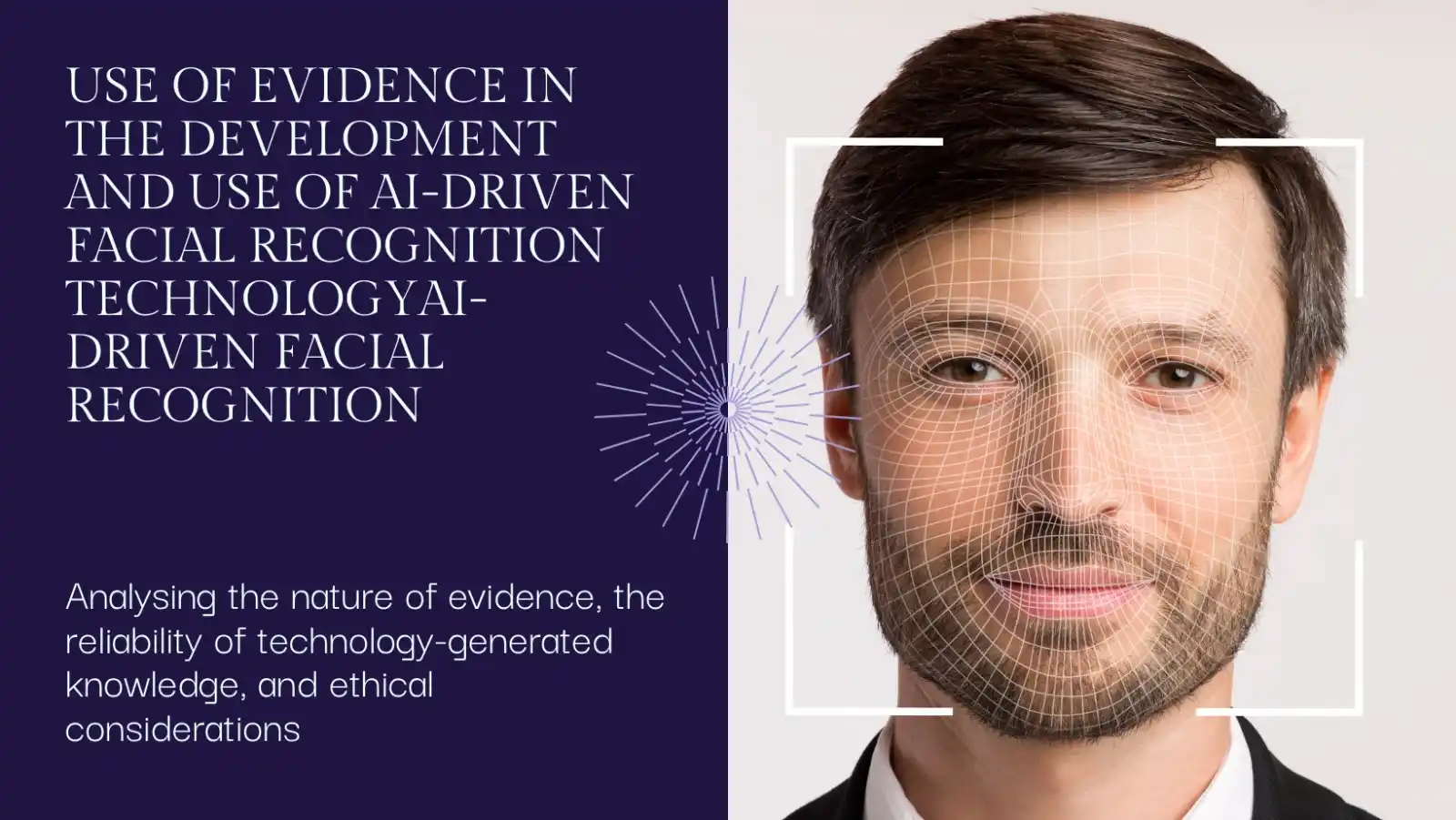
This is AI-driven facial recognition technology—a powerful blend of knowledge and technology that demands a TOK-level inquiry into how evidence is generated, trusted, and acted upon in the age of artificial intelligence.
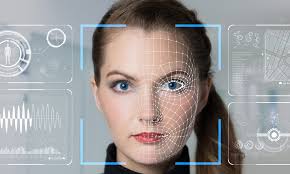
Facial recognition technology highlights how machines generate evidence, raising TOK questions about trust, accuracy, and the nature of knowledge.
Segment 1: The Nature of Evidence in Facial Recognition
Real-World Context: Facial recognition uses AI algorithms trained on millions of images to detect and identify faces. But is what it produces knowledge, or just data inference?
TOK Concepts:
-
Evidence: What counts as “evidence” when it’s generated by machines?
-
Justification: Is algorithmic matching a justified belief?
TOK Knowledge Questions (KQs):
-
How is digital evidence interpreted in the absence of human reasoning?
-
Can probabilistic matches (e.g., 85% identity match) be considered valid evidence?
TOK Insight: Unlike scientific evidence grounded in observable physical phenomena, AI-generated “evidence” is often opaque, operating in a black-box model. TOK asks us to consider: If we can’t see how the algorithm arrived at its conclusion, can we trust its output?
Segment 2: Technology-Generated Knowledge and Human Identity
TOK Key Themes: Technology and Knowledge, Human Sciences, Natural Sciences
Discussion Points:
-
How do AI systems “know” who you are?
-
Does the accuracy of a system equate to reliability of knowledge?
-
How does facial recognition redefine what it means to be “recognized”?
TOK Knowledge Questions:
-
To what extent is the knowledge produced by AI systems objective?
-
Can technology redefine human concepts like identity and presence?
TOK Framework: In the Area of Knowledge (AOK) Human Sciences and Optional Theme Knowledge and Technology, facial recognition challenges our assumptions about knowledge as interpretation vs knowledge as computation. Here, we confront the method and tools dimension of the knowledge framework—how machines shape the way knowledge is produced and used.
Segment 3: Bias, Ethics, and Justice in AI Evidence
Theme: Knowledge and Ethics
AI doesn’t exist in a vacuum. When facial recognition systems disproportionately misidentify people of color or women, the consequences are real and deeply unjust.
TOK Concepts:
-
Perspective: Whose data is being trained on, and whose is being excluded?
-
Ethics: What are the consequences of using AI-generated evidence in law enforcement?
TOK Knowledge Questions:
-
How do ethical values influence what counts as valid evidence in technology?
-
Can we separate technological knowledge from the social systems it reflects?
Real-World Implication: In cases like wrongful arrests based on facial recognition mismatches, we’re forced to ask: If the evidence is flawed, can the knowledge claim be trusted?
Enrichment: TED Talk by Fei-Fei Li
Title: “How we’re teaching computers to understand pictures”
explains the basic science and technology behind facial recognition systems and how these systems identify and verify individuals.
Key Points Covered in the Video:
-
How facial recognition scans work:
The video explains that facial recognition technology maps facial features mathematically by analyzing the distance between eyes, nose, mouth, jawline, etc., and then creates a unique facial signature. -
Machine learning and data input:
The system is trained using large datasets of labeled images to learn patterns and improve accuracy through deep learning and neural networks. -
Steps of identification:
It shows how a camera captures an image, transforms it into data, and then compares it to a database of known faces to find matches. -
Accuracy and challenges:
The video briefly touches on accuracy issues, lighting, angles, and facial expressions, and how these can affect performance. -
Ethical concerns and bias:
Toward the end, the video raises concerns about privacy, surveillance, and racial bias, especially how certain algorithms have been shown to perform worse on darker skin tones or non-male faces.
In TOK terms:
This video is perfect for exploring:
-
How evidence is generated through technology
-
The reliability and limitations of machine-generated knowledge
-
Ethical implications of using facial recognition in society
-
The role of perspective and bias in interpreting technological outputs
Relevance to TOK:
Dr. Fei-Fei Li, a trailblazer in computer vision, explores how machines interpret images and form inferences—crucial to how facial recognition works. Her insights invite reflection on how computational knowledge evolves and how visual information becomes knowledge through AI models.
TOK Prompt:
How is understanding a picture different for a human than for a machine?
Learning Outcomes for IB TOK Students
-
Understand how evidence in the digital age is constructed and contested.
-
Analyze how technology mediates knowledge and introduces both capabilities and limitations.
-
Reflect on the ethical implications of machine-generated knowledge, especially in high-stakes contexts like law enforcement.
-
Apply the TOK knowledge framework: Evidence, Methods, Perspectives, Ethics.
TOK Reflection Prompt
If a machine identifies you but you weren’t there—who is the knower, and who is being known?
TOK Vocabulary in Focus
-
Evidence: Data that supports or refutes a claim.
-
Algorithm: A process or set of rules followed by a machine to solve a problem.
-
Bias: Prejudice in favor of or against one thing, person, or group.
-
Justification: The support for a belief or claim to be considered knowledge.
-
Interpretation: The process of making meaning from data, often shaped by perspective.
2) “The era of blind faith in big data must end” by Cathy O’Neil. Data scientist Cathy O’Neil explores the biases in big data and algorithms, shedding light on how these biases can be inherent in AI technologies like facial recognition, and the impact they have on society.
3) “Why we need to think more about the algorithmic bias” by Joy Buolamwini. Joy Buolamwini, a researcher at the MIT Media Lab, focuses on the social implications and biases of AI, particularly in facial recognition technology. Her talk is essential for understanding the ethical considerations in AI development.
TOK Workshop Series: Connecting Knowledge, Technology, Language & Evidence
This includes two full-fledged, immersive workshops:
-
AI Ethics Workshop — Facial Recognition Technology: A Double-Edged Sword
-
Climate Change Communication Workshop — Language, Evidence & Public Understanding
Each workshop follows a TOK-aligned structure with clear stages, key concepts, knowledge questions, and learning outcomes.
Workshop 1: AI Ethics Workshop
Title: Facial Recognition Technology: A Double-Edged Sword
Total Duration: ~3 hours 15 minutes
Part 1: Interactive Lecture + TOK Concepts Discussion (45 minutes)
-
Briefing: Define facial recognition technology. Explain how AI algorithms “learn” facial features.
-
TOK Concepts:
-
Evidence: What qualifies as reliable evidence in AI-based recognition?
-
Technology and Knowledge: Is algorithmic output equivalent to knowledge?
-
-
Mini-Cases: Present cases of false positives in law enforcement, privacy breaches, and racial bias in datasets.
-
Knowledge Questions:
-
How does AI-generated evidence compare to human observation?
-
Can we ever fully justify knowledge created through algorithmic processes?
-
Part 2: Hands-On AI Tool Experiment (1 hour)
-
Tool Use: Use platforms like Face++ or Microsoft Azure Face API (ensuring consent and privacy).
-
Activity: Upload diverse (safe, stock) images and compare recognition results across age, gender, ethnicity.
-
Analysis:
-
Bias in data sets
-
Variability in accuracy
-
Discussion on black-box decision-making in AI
-
-
Mini Discussion Prompt:
If the AI misidentifies you, where does the error lie—in the tool, the data, or the concept of identity?
📚 Part 3: Group Case Study Analysis (1 hour)
-
Group Roles: Assign cases like:
-
Law enforcement facial scans (wrongful arrest)
-
Unlocking phones via FaceID
-
AI in airport security
-
Emotion recognition in retail analytics
-
-
TOK Focus:
-
Justification: Is “machine match” a form of knowledge?
-
Ethics: Should this tech be allowed in public spaces without consent?
-
Perspective: Whose identity is misrepresented—and why?
-
-
Group Output:
-
5-min presentation
-
TOK-style reflections (using the knowledge framework: scope, methods, ethics, perspectives)
-
Part 4: Debrief + Reflection Circle (30 minutes)
-
Sharing: Each group shares findings and ethical takeaways.
-
TOK Prompt:
“If knowing someone’s face doesn’t mean knowing their identity, what does technology truly ‘know’?”
-
Written Reflection Prompt:
“How does the development of AI facial recognition challenge traditional notions of evidence and knowing?”
Learning Outcomes
-
Deep understanding of how technology produces, distorts, or verifies knowledge
-
Critical evaluation of digital evidence and machine-generated claims
-
Ethical reasoning and sensitivity to bias, representation, and surveillance
-
Application of TOK frameworks to real, interdisciplinary scenarios
Recommended TED Talks:
-
Fei-Fei Li – “How we’re teaching computers to understand pictures”
-
Joy Buolamwini – “How I’m fighting bias in algorithms”
-
Cathy O’Neil – “The era of blind faith in big data must end”
Workshop 2: Climate Change Communication Workshop
Title: Framing the Future: Language, Evidence & Climate Knowledge
Total Duration: ~3 hours 30 minutes
Part 1: Role-Playing Debate – Language & Stakeholders (1 hour)
-
Group Roles:
-
Climate Scientists (IPCC)
-
Environmental Activists (e.g., Extinction Rebellion)
-
Government Officials
-
Industry Lobbyists
-
Climate Skeptic Media
-
-
Prep: Each group frames climate change using their role’s preferred language:
(“crisis” vs “challenge”, “global warming” vs “climate variability”) -
Mock Debate: Discuss:
-
Evidence: What is being presented and how?
-
Language: What’s emphasized? What’s omitted?
-
Influence: Who is swayed and why?
-
Part 2: Media Language Analysis Roundtable (1 hour)
-
Assigned Homework: Students analyze 3 pieces of media (e.g., Guardian article, Twitter post, UN Report).
-
Roundtable Prompt:
-
How does metaphor use (“Earth has a fever”) shape urgency?
-
Does language simplify or distort complex climate evidence?
-
Is public reaction more to facts or framing?
-
-
TOK Knowledge Questions:
-
How does language affect the interpretation of scientific evidence?
-
To what extent can metaphors clarify or mislead?
-
Part 3: Creative Communication Project (1 hour)
-
Task: Create an engaging climate message in a chosen medium:
-
Social media graphic (Instagram reel, carousel)
-
Short video
-
Campaign slogan and poster
-
Mini blog or open letter
-
-
Criteria:
-
Use language to convey knowledge and evidence
-
Must persuade or inform a specific audience
-
TOK Reflection included (e.g., Why did you choose that metaphor?)
-
Part 4: Debrief and Reflection (30 minutes)
-
Gallery Walk: Students observe and comment on each other’s projects.
-
Reflection Prompts:
“How does language help or hinder your trust in climate knowledge?”
“Whose language matters the most in a global issue?” -
Optional Exit Ticket: Write 3 ways language shapes your own beliefs about climate change.
Learning Outcomes
-
Understand how language mediates evidence
-
Evaluate persuasive techniques in climate communication
-
Reflect on how knowledge is shaped by framing and cultural narratives
-
Apply TOK thinking to real-world media and environmental issues
Recommended TED Talks:
Katharine Hayhoe – “The most important thing you can do to fight climate change: talk about it”-
This video offers a powerful and visually rich introduction to traditional Polynesian wayfinding, a form of indigenous navigation without modern instruments.
Gist of the Video:
-
Polynesian wayfinding is a sophisticated, non-instrumental navigation system
The video showcases how Polynesian navigators travel vast ocean distances using stars, swells, clouds, bird behavior, and intuition, passed down orally over generations. -
Mau Piailug’s legacy and cultural revival
It highlights Mau Piailug, a master navigator from Micronesia who taught Hawaiians to revive this lost knowledge, sparking a movement to reclaim indigenous identity and environmental respect. -
The Hokuleʻa and modern voyages
The Hokuleʻa canoe is shown retracing ancient routes using only traditional methods, proving the accuracy and value of this ancient science. -
Connection to nature and knowledge
Navigators describe how their knowledge is not written down but stored in memory and experience, revealing a deeply spiritual and observational relationship with the ocean.
TOK Connections:
-
-
Evidence: How can knowledge from natural patterns (stars, waves) count as valid evidence?
-
Indigenous knowledge systems: What does this tell us about the value of oral knowledge vs. written documentation?
-
Perspective: How might Western science underestimate non-instrumental methods?
-
Sustainability & cultural preservation: What knowledge is lost when traditional systems are ignored?
-
Mary Robinson – “Why climate change is a threat to human rights”explores how indigenous communities are using mapping as a tool to reclaim their land, culture, and stories, challenging the dominance of Western cartography.
Gist of the Video:
-
Maps have power—and bias
Western maps often erase indigenous perspectives, languages, and territories. The video argues that maps are not neutral; they reflect power dynamics and colonial histories. -
Indigenous mapping is more than geography
For many indigenous groups, maps are about stories, relationships, ecological knowledge, and sacred spaces—not just physical space. -
Reclaiming land and identity
Indigenous mapmakers are using tools like participatory mapping, drone technology, and oral history to document their own landscapes, validate land claims, and preserve cultural knowledge. -
Examples include Canada, New Zealand, and the Amazon
The video highlights how different communities across the world are integrating traditional knowledge with modern mapping tools to fight environmental exploitation and restore sovereignty.
TOK Connections:
-
Evidence & Perspective: What counts as valid knowledge when mapping a place—satellite data or lived experience?
-
Indigenous Knowledge Systems: How do non-Western ways of knowing redefine what a map can be?
-
Ethics: Who gets to decide how a land is represented or who it belongs to?
-
Technology & Knowledge: How are digital tools now amplifying historically silenced voices?
Supplementary Assignments (Optional for Both Workshops)
-
TOK Essay Prompt:
“To what extent can knowledge produced through technology (or language) be considered reliable evidence?” -
Podcast Assignment:
Create a mini podcast (3–5 mins) summarizing your TOK takeaway from the workshop, citing one TED talk and one case. -
Media Tracker Journal:
For one week, students collect examples of AI use or climate talk in media and reflect on the language or technology used.
Slide 4-Connecting knowledge and politics through TOK concept evidence
COVID-19 Vaccination Policies and Public Health
Connecting Knowledge, Politics, and Evidence in Theory of Knowledge (TOK)
Real-World Example: COVID-19 Vaccination Policies and Public Health
Keywords: Theory of Knowledge, TOK, COVID-19 vaccines, scientific evidence, misinformation, politics, ethics, vaccine equity, global health, pandemic policy, public trust, knowledge and politics, knowledge and evidence, IB TOK activities
Background
The global response to the COVID-19 pandemic—especially in the development, distribution, and communication of vaccination policies—offers a rich case study in how scientific knowledge is applied, interpreted, and contested in political arenas. This issue intersects not only with the natural sciences (evidence and experimentation) but also with human sciences, ethics, global politics, and public trust.
TOK Analysis
Interplay of Science and Politics in Vaccine Development
Discussion Points:
-
How was scientific evidence used to develop and approve COVID-19 vaccines rapidly (e.g., mRNA technology)?
-
What political pressures (e.g., public demand, election cycles, economic concerns) influenced vaccine rollout strategies?
-
How did different governments interpret and utilize scientific data when enforcing policies such as vaccine mandates or international travel restrictions?
TOK Knowledge Questions:
-
To what extent can scientific evidence remain objective when influenced by political agendas?
-
How do values and priorities affect the application of scientific knowledge in policymaking?
Public Trust and Misinformation
Discussion Points:
-
How did the communication of evidence affect public trust in the vaccine?
-
What role did misinformation, social media, and political bias play in vaccine hesitancy?
-
How can political leaders balance expert advice with public opinion during a crisis?
TOK Concepts:
-
Evidence and Belief: Is evidence enough to convince the public without effective communication?
-
Perspective and Emotion: How do emotions and social identity impact what we accept as valid knowledge?
Ethical and Global Considerations
Discussion Points:
-
What ethical dilemmas arose in vaccine allocation? Should certain age groups or countries be prioritized?
-
How did global politics shape vaccine access (e.g., vaccine nationalism vs. COVAX initiatives)?
-
What is the role of equity and justice in global health emergencies?
TOK Knowledge Questions:
-
Who decides what is ethical in times of global crisis?
-
To what extent does global health knowledge require collaboration beyond borders?
Relevant TED Talks for TOK Integration
Bill Gates – “How we must respond to the coronavirus pandemic”- Explores the intersection of science, funding, and leadership.
Gist of the Video:
-
Names carry ancestral knowledge and values
In Native Hawaiian culture, names are more than labels — they hold stories, spiritual meanings, and family lineage. They connect individuals to the land, community, and the past. -
Colonial erasure and language loss
The video reflects on how colonization and the suppression of the Hawaiian language led to the loss of traditional names, breaking a key link in cultural knowledge and identity. -
Revival and empowerment through naming
By reclaiming and giving traditional names, Native Hawaiians are restoring pride, identity, and resistance against historical erasure. Naming becomes a form of reclaiming epistemic agency. -
Education and future generations
The speakers emphasize teaching young people the value of names, language, and cultural knowledge to empower future generations and preserve indigenous wisdom.
TOK Connections:
-
Language and Knowledge: How do names shape our understanding of identity, place, and history?
-
Indigenous Knowledge Systems: What happens when traditional naming systems are lost or replaced?
-
Perspective and Power: Who controls naming, and what does that say about authority in knowledge?
-
Memory and Emotion as Ways of Knowing: How do names preserve emotional and cultural memory?
Paul Knoepfler – “The ethical dilemma of designing your baby”→ Highlights the ethics of science and policy, drawing parallels to vaccine dilemmas. In a deeply reflective and poetic short film in which Rowen White, a Mohawk seedkeeper, speaks about the cultural, spiritual, and ecological knowledge embedded in indigenous seedkeeping practices.
Gist of the Video:
-
Seeds carry ancestral memory and wisdom
Rowen White describes seeds as living archives — carriers of stories, ceremony, and ancestral relationships. Each seed holds a history of resilience, survival, and cultural continuity. -
Seedkeeping is a sacred responsibility
For indigenous communities, tending to seeds is an act of cultural preservation, ecological stewardship, and spiritual reciprocity. It connects people to the land and to future generations. -
Colonial disruption and seed loss
The video reflects on how colonization and industrial agriculture have led to the loss of biodiversity and traditional seed knowledge — severing relationships with land and culture. -
Reviving seed sovereignty
The film emphasizes the revival of indigenous seedkeeping practices as a way to reclaim cultural identity, rebuild resilience, and nurture hope in the face of ecological crisis. -
A call for reverence and relationship
Ultimately, Rowen invites viewers to reorient their relationship with food, land, and knowledge — not as consumers, but as caregivers and storytellers.
TOK Connections:
-
Indigenous Knowledge Systems: How is knowledge about seeds preserved, passed down, and practiced outside written texts?
-
Evidence and Memory: Can seeds themselves be considered forms of evidence or memory in a cultural knowledge system?
-
Ethics and Stewardship: What ethical responsibilities arise from holding and sharing traditional knowledge?
-
Language and Storytelling: How do stories told through and about seeds shape our understanding of food, culture, and sustainability?
TOK Activities
Activity 1: Policy Review and Role-Play
Instructions:
-
Policy Research: Assign students to research COVID-19 vaccine policies across nations (e.g., India, Israel, USA, Sweden, South Africa).
-
Group Roles:
-
Health officials
-
Politicians
-
Scientists
-
Civil society leaders
-
Vaccine skeptics
-
International agencies (WHO, GAVI)
-
Role-Play Setup:
-
Panel Simulation: Each group presents and defends its policy, justifying decisions using evidence and ethical reasoning.
-
Cross-examination: Groups challenge one another on inconsistencies, ethical blind spots, or lack of evidence.
Reflection:
-
What role did evidence play in justifying decisions?
-
Where did political interest override scientific advice?
-
How did public trust influence each role’s actions?
Activity 2: Global Pandemic Simulation Game — “The Vaccine Conundrum”
An immersive, experiential learning activity that turns your class into a simulated global health response team.
Preparation:
-
Fictional Scenario: Introduce a virus (“Novid-25”) spreading globally. Vaccine is in development.
-
Role Assignments:
-
Country leaders (developed and developing nations)
-
WHO, GAVI, UN
-
Pharmaceutical companies
-
Media heads
-
Anti-vaccine movements
-
Civil rights groups
-
Game Phases
1. Initial Briefing (15 minutes)
-
Background on virus spread and vaccine trials.
-
Role-specific secret objectives and moral dilemmas.
-
Prompt: “What’s more important—saving your country or saving humanity?”
2. Strategy Planning (30 minutes)
-
Each group forms plans based on role: secure vaccines, manage press, build alliances, handle misinformation.
3. Global Summit (45 minutes)
-
Negotiate vaccine deals, create public health policies, and address media pressures.
-
Issues may arise: mutation strain, fake news, civil unrest, supply delays.
4. Crisis Management (30 minutes)
-
Introduce wildcard events: unexpected vaccine side effects, cyberattacks on health systems, protest waves.
5. Reflection and Debrief (30 minutes)
-
Class-wide discussion:
-
“What influenced your decision: evidence, emotion, or politics?”
-
“Did your priorities shift during the game?”
-
“How does knowledge get negotiated in a crisis?”
-
Learning Outcomes
-
Evaluate how political power and scientific evidence interact in real-world decision-making
-
Understand the ethics of public health policy, equity, and misinformation
-
Experience the complexity of knowledge-based decisions under uncertainty
-
Enhance TOK skills: argument construction, role perspective, reflection, and awareness of global implications
Supplementary Tools
-
Visual Stimuli: Real COVID-19 headlines, data dashboards, tweets, and political statements
-
TOK Vocabulary Cards: Evidence, justification, perspective, ethics, reliability, emotion
-
Exit Ticket Prompt:
“How did your perception of what counts as evidence shift during this experience?”
Slide 5- Connecting knowledge and religion through TOK concept evidence
Evolution vs. Creationism: Interpreting Evidence Through Religion and Science in TOK
Keywords: Theory of Knowledge, TOK, evolution vs creationism, knowledge and religion, science and faith, evidence in TOK, knowledge frameworks, religious belief, empirical evidence, belief systems, TOK mock trial, TOK activity
Real-World Example: The Evolution vs. Creationism Debate
Background
The long-standing debate between evolutionary theory and creationist beliefs presents a powerful lens through which to explore how evidence is used and interpreted within different knowledge frameworks. While evolutionary theory relies on scientific evidence such as fossil records, genetic data, and natural selection, creationism often draws on religious texts, faith, and philosophical reasoning.
This contrast highlights the epistemological tension between empirical inquiry and spiritual belief, making it ideal for TOK exploration.
TOK Analysis
Types of Evidence as TOK concept in Evolution and Creationism
Discussion Points:
-
What types of empirical evidence support evolution? (e.g., fossil records, carbon dating, molecular biology)
-
What types of non-empirical evidence support creationism? (e.g., sacred texts, theological arguments, personal faith)
-
How do these forms of evidence reflect different ways of knowing (sense perception, reason, faith, intuition)?
TOK Knowledge Questions:
-
To what extent is knowledge dependent on the form of evidence we value?
-
Can faith be considered a legitimate source of knowledge?
Interpreting TOK concept Evidence within Different Knowledge Frameworks
Discussion Points:
-
How do the natural sciences interpret observable data differently than religious knowledge systems?
-
How do belief systems shape what counts as credible evidence?
-
What role does confirmation bias play in how we accept or reject information?
TOK Knowledge Questions:
-
How do knowledge communities (e.g., scientists, religious groups) influence interpretation of evidence?
-
Can competing knowledge systems arrive at equally valid truths?
Implications for Knowledge and Understanding
Discussion Points:
-
What does this debate reveal about the coexistence or conflict of knowledge systems?
-
How does it affect education, law, and policy in different countries?
-
Can science and religion be integrated, or must they remain epistemically separate?
TOK Insight:
This debate pushes students to reflect on the nature of truth, objectivity, and subjectivity, and how knowledge can be deeply influenced by cultural, historical, and personal contexts.
Recommended TED Talks for Extension
Dan Dennett – “Let’s teach religion — all religion — in schools”→ Helps frame religion as a cultural knowledge system. The video explores how indigenous knowledge systems and Western science can coexist, complement, and enrich each other, especially in addressing environmental and societal challenges.
Gist of the Video:
-
Indigenous knowledge is science — but expressed differently
Indigenous elders, scientists, and youth share how traditional ecological knowledge is built from long-term observation, lived experience, and spiritual connection with the land. It’s a holistic and relational form of science. -
Two-eyed seeing approach
The concept of “two-eyed seeing” (Etuaptmumk), introduced by Mi’kmaq Elder Albert Marshall, encourages viewing the world through one eye with indigenous knowledge and the other with Western science, bringing together the strengths of both. -
Respect, reciprocity, and relationship
Unlike the extractive tendency in some scientific models, indigenous knowledge emphasizes respectful relationship with nature, focusing on balance, responsibility, and sustainability. -
Youth and education
Indigenous youth are reclaiming and practicing both ways of knowing. The video advocates for integrating indigenous knowledge in classrooms and research to develop more inclusive, ethical, and grounded science. -
Healing through knowledge integration
Bridging these systems is presented not as merging one into the other, but as honoring both epistemologies, fostering mutual respect and healing from colonial legacy.
TOK Connections:
-
Knowledge Frameworks: How can two different knowledge systems investigate the same reality and still be valid?
-
Ways of Knowing: What roles do emotion, reason, language, and faith play in both indigenous and scientific knowledge?
-
Ethics and Perspective: How does colonization affect which knowledge systems are considered “legitimate”?
-
Evidence: What counts as evidence in oral and relational traditions vs. empirical science?
Dan Pink – “The puzzle of motivation”
→ Explores how belief and motivation can be rooted in non-empirical frameworks.
Activity: Comparative Analysis & Discussion
Assignment:
Students independently research both evolutionary theory and creationist perspectives, focusing on:
-
Type of evidence used
-
Justification of claims
-
Role of emotion, reason, and faith
-
Epistemic certainty
Group Analysis:
In mixed groups, students:
-
Compare and contrast evidence use
-
Analyze implications on education, science, and belief
-
Discuss how understanding is shaped by cultural lenses
Class Discussion:
-
Can both perspectives coexist in a pluralistic knowledge society?
-
What challenges arise in reconciling conflicting knowledge systems?
Dynamic TOK Activity: Mock Trial
“The Case of Evolution vs. Creationism”
Overview:
This interactive courtroom simulation allows students to argue and defend evolutionary theory and creationist beliefs, focusing on how evidence is constructed and interpreted within each knowledge framework.
Preparation:
Role Assignments:
-
Team A – Prosecution (Evolutionary theory advocates)
-
Team B – Defense (Creationist belief defenders)
Roles include:
-
Attorneys (Opening/Closing arguments, evidence framing)
-
Expert Witnesses:
-
Evolution: Biologists, geneticists, archaeologists
-
Creationism: Theologians, philosophers, anthropologists
-
-
Judge (neutral moderator)
-
Jury (teachers or classmates not on trial teams)
Research Phase:
Each team gathers:
-
Scientific or theological evidence
-
Counter-arguments
-
TOK vocabulary (e.g., belief, justification, certainty, perspective, evidence, bias)
Structure of the Mock Trial:
1. Opening Statements (10 minutes per team)
→ Present stance and preview main arguments
2. Witness Testimony & Cross-Examination (15–20 mins per team)
→ Witnesses testify based on research
→ Opposing side challenges with counter-evidence or questions about reliability
3. Closing Arguments (10 minutes per team)
→ Synthesize main points and appeal to epistemic strength of their evidence
4. Jury Deliberation & Verdict (15–20 minutes)
→ Jury discusses and delivers verdict: Which side better justified its claims?
Debrief and Discussion (20–30 minutes)
Prompts:
-
What counts as strong evidence in science vs. religion?
-
Did emotional conviction influence the argument more than factual data?
-
What did you learn about balancing respect for different knowledge systems?
Learning Outcomes
-
Critical understanding of how evidence is used in religion and science
-
Insight into epistemological differences between knowledge systems
-
Appreciation of diverse perspectives through respectful debate
-
Mastery of TOK skills: interpretation, justification, argumentation, critical thinking
Additional Tools and Enhancements
-
Guest Speaker: A local religious leader or scientist discusses real-world experience with the evolution-creationism dialogue.
-
Student Guidebook: Provide background articles, key terms (e.g., natural selection, intelligent design, paradigm, authority), and a TOK vocabulary list.
-
Visual Aids: Fossil diagrams, religious text excerpts, timelines of evolutionary science and creationist thought
-
Rubric: Assess argument strength, use of TOK language, engagement with evidence, and respectfulness
Slide 6- Connecting knowledge and indigenous society through evidence
Polynesian Wayfinding: Indigenous Knowledge, Evidence & Navigation in TOK
Keywords: Theory of Knowledge, TOK, indigenous knowledge, Polynesian wayfinding, evidence, navigation, cultural heritage, sustainability, traditional knowledge systems, knowledge frameworks, experiential learning, ocean navigation, stars, environmental awareness, Pacific Islands, TOK activity
Real-World Example: Revival of Traditional Polynesian Wayfinding
Background
Polynesian wayfinding refers to the traditional navigation techniques developed by the indigenous peoples of the Pacific Islands to traverse thousands of miles of open ocean without modern instruments. These techniques, passed orally from generation to generation, rely on a deep and holistic understanding of stars, ocean swells, wind directions, cloud formations, and bird migration patterns.
In recent decades, there has been a revival of this knowledge, spearheaded by organizations like the Polynesian Voyaging Society, blending ancient wisdom with global environmental consciousness. This real-life example offers a profound opportunity for students to engage with indigenous knowledge systems through the lens of evidence, observation, interpretation, and cultural identity.
TOK Analysis
Indigenous Knowledge as a Navigational Tool
Discussion Points:
-
What forms of natural evidence do traditional navigators observe? (e.g., stars, swells, birds)
-
How is this knowledge transmitted, acquired, and validated in indigenous societies?
-
How does the oral tradition compare with scientific documentation in terms of preserving and communicating knowledge?
TOK Knowledge Questions:
-
How does the interpretation of natural patterns function as a form of evidence?
-
In what ways can experiential knowledge be as valid as experimental or empirical data?
Integration of Traditional and Modern Knowledge Systems
Discussion Points:
-
How have modern scientists responded to Polynesian navigation techniques?
-
What happens when indigenous knowledge meets GPS technology or oceanographic modeling?
-
What tensions and synergies arise when different knowledge systems attempt to collaborate?
TOK Knowledge Questions:
-
Can different ways of knowing (e.g., intuition, observation, reason, memory) coexist in the pursuit of reliable knowledge?
-
How does blending traditional and scientific knowledge expand our understanding of the world?
Cultural and Environmental Implications
Discussion Points:
-
Why is the revival of wayfinding important for cultural identity in the Pacific Islands?
-
How does this traditional knowledge foster a sustainable relationship with nature?
-
What lessons can modern society learn from the interconnectedness of indigenous knowledge and ecological understanding?
TOK Knowledge Questions:
-
How can knowledge systems be used to promote environmental stewardship?
-
What is lost when cultural knowledge is not preserved?
Recommended TED Talks for Extension
-
Anupam Mishra – “The ancient ingenuity of water harvesting”
→ Showcases traditional systems’ sophistication and sustainability. -
Emma Marris – “Nature is everywhere — we just need to learn to see it”
→ Reinforces the observational depth behind indigenous environmental awareness. -
Theaster Gates – “How to revive a neighborhood: with imagination, beauty and art”
→ Parallels the cultural revitalization achieved through reviving wayfinding. -
Gus Casely-Hayford – “The powerful stories that shaped Africa”
→ Highlights the significance of oral history and cultural continuity. -
Sylvia Earle – “My wish: Protect our oceans”
→ Emphasizes the urgency of protecting the marine environments central to Polynesian culture. -
Suzanne Simard – “How trees talk to each other”
→ Offers a biological metaphor for interconnectedness, resonating with Polynesian ecological insight.
TOK Activity 1: Comparative Documentary & Simulation
Documentary Project
-
Assignment: Students research and create a short film or multimedia presentation on Polynesian wayfinding.
-
Focus: Evidence, knowledge transmission, environmental connection, cultural significance
-
Enrichment: If possible, include interviews with navigators or anthropologists.
Navigation Simulation
-
Objective: Teach students the core techniques of wayfinding (e.g., star alignment, swell direction).
-
Tools: Use star-gazing apps (e.g., SkyView), maps, or printed constellation charts to simulate sea travel.
-
Reflection: Debrief comparing traditional navigation and GPS-based tools.
Group Discussion
-
What did we learn about trusting natural signs as knowledge?
-
How did it feel to rely on non-digital tools?
-
What forms of justification were evident in traditional navigation?
TOK Activity 2: Interactive Navigational Challenge
“Sailing the Stars: Polynesian Wayfinding”
Preparation
1. Research Briefing (30 mins)
-
Introduce students to:
-
The Hokuleʻa voyages
-
How stars are used as compasses
-
The logic behind wave and bird pattern interpretation
-
2. Technology Setup
-
Use:
-
Star-tracking apps (Sky Guide, Star Walk)
-
Navigation games or Google Earth ocean layer
-
Simple simulation maps on classroom floor with markers for celestial bodies and currents
-
Challenge Structure
Part 1: Introduction (30 mins)
-
History of Polynesian navigation
-
Principles of wayfinding: non-instrumental cues, star compasses, environmental feedback
Part 2: Setup Phase: Preparing for the Journey (15 mins)
-
Split students into “voyaging teams”
-
Assign journey routes with specific star paths and natural clues
-
Introduce variables (e.g., cloudy sky, changing winds)
Part 3: Execution (1 hour)
-
Students plan and “sail” through simulated journey using star charts, clue cards, and logical interpretation
-
Adjust for scenarios introduced mid-journey: loss of stars, waves changing, bird migration clues
Part 4: Debrief & Critical Analysis (45 mins)
-
What decisions were based on intuition? What were rational/logical?
-
Did any group change strategy mid-voyage? Why?
-
How does this challenge our understanding of “primitive” vs “modern” knowledge?
Learning Outcomes
-
Grasp of how indigenous knowledge is evidence-based, though interpreted through different lenses
-
Development of critical thinking around what qualifies as “proof” or “data”
-
Recognition of the sophistication in oral and cultural knowledge systems
-
Understanding of cultural identity, heritage, and sustainability in knowledge preservation
Additional Elements
-
Guest Speaker: Invite a local anthropologist, Polynesian navigator (via Zoom), or cultural historian.
-
Reflective Essay Prompt:
“Is indigenous knowledge as valid as scientific knowledge when it comes to understanding and interacting with nature?”
-
Infographic Creation: Have students map out a comparative infographic: GPS Navigation vs. Polynesian Wayfinding
[/membership]